Posts

Vote for Development in UttarPradesh – But don’t make the development agenda minimalist

Email: khyati.khush@gmail.com Seventy years of democracy – India successfully makes world’s largest and youngest democracy, and happens to be world’s fastest growing economy now. Uttar Pradesh – the ancient, resourceful and most populous state is  also nation’s highly politically active state. Lying across the Ganga-Yamuna fertile plains, UttarPradesh has been the centre of ancient civilisations from Ramrajya to Maurayan empire, from Kushan, Gupta empire to medieval age Mughal empire. UttarPradesh fought back imperalism under BritishRaj right from 1857 rebellion – Cawnpore Rebellion, Meerut Rebellion to active participation in Non-Cooperation, Quit India Movement, and majorly contributed to the nation’s freedom struggle. The land has nurtured Indian culture, and has been a vital centre for education, learning, prosperity, cultural exhange, integral unity, social and political activities. As known, most Prime Ministers of Sovereign India have come from Uttar Pradesh. Being ...
Black Money and Demonetization: Debunking myths and apprehensions

email: khyati.khush@gmail.com The big ticket currency reforms introduced by Prime Minister Modi to curb circulation of fake currency, trap the black money and pave-way for a gen-next digital economy. Now, why when everywhere it is labeled as ‘demonetization’, it is preferred to mention currency reforms here? It is because the larger picture gets hidden under the label of demonetization, whereas currency reforms widely define the intention and direction of current monetary initiatives. Black Money or Parallel Economy? At first, it is important to understand the meaning of ‘parallel economy’, which in commonly is referred to as black money. Though ‘Parallel economy’ is the wider concept, of which ‘black money’ is a component. Parallel economy has political, commercial, legal, industrial, social and ethnic aspects. There are legitimate and illegitimate sectors under parallel economy, the objectives of both certainly confront one-another (Sarkar, 2010). India being a mixed ...

Life along Indo-Pak Border in Rajasthan: A Cultural Insight

Image
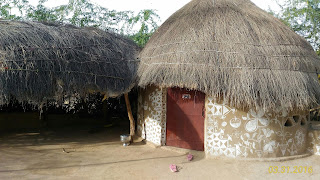
Email: khyati.khush@gmail.com (Based on visit in the rural areas along the international border in Rajasthan.)  The Radcliffe line recognised in August 1947, partitioned India and Pakistan. India shares 2900km International Border (IB) with Pakistan on the western front. Geographically, Rajasthan is the largest state on the western border, with an exquisite terrain. Rajasthan- ‘the land of kings’ as it means with its unique desert terrain is identified with a nomadic, semi-nomadic and royal culture preserved by the communities living specifically in the remote areas along the International Border. The social structure along the international border in Rajasthan is diverse, exhibiting unique traditions, folklore and customs. Wars, Military Standoffs and settlement patterns Before partition, Sindh province has been home to Sindhi Rajputs (Bhuttos, Bhattis, Rathores, etc), Sodha Rajputs, Garasia & Daneta Jatts, Meghwals, Nayaks, Bhils, Kolis, Faqirs, etc. Similarly...

Skilling for life and livelihood through the basic level of Education: Old approach in need of revival

email: khyati.khush@gmail.com Education in India has always been a symbol of pride and heritage. Delivery of quality education to all has been prolonged effort post independence. Presently, India is one of the world’s fastest growing economies in terms of GDP share (PPP), only behind China and US (World Bank Report 2011). The ‘Global Economic Prospects’ report published by World Bank in January’2015 forecasted that by 2017 India will out-pace China in terms of GDP growth rate. [1] The country sits on a most advantageous situation with 65% of its population being under the age of 35 and approximately 12 million individuals on an average are expected to join the workforce every year. With these demographics, it happens to be world’s youngest nation with median age of 27years. However, the ability of the nation to reap maximum benefits out of this better-off is doubted when the quality of our education system is bothering. Annual Status of Education Report (ASER) 2014 mention...